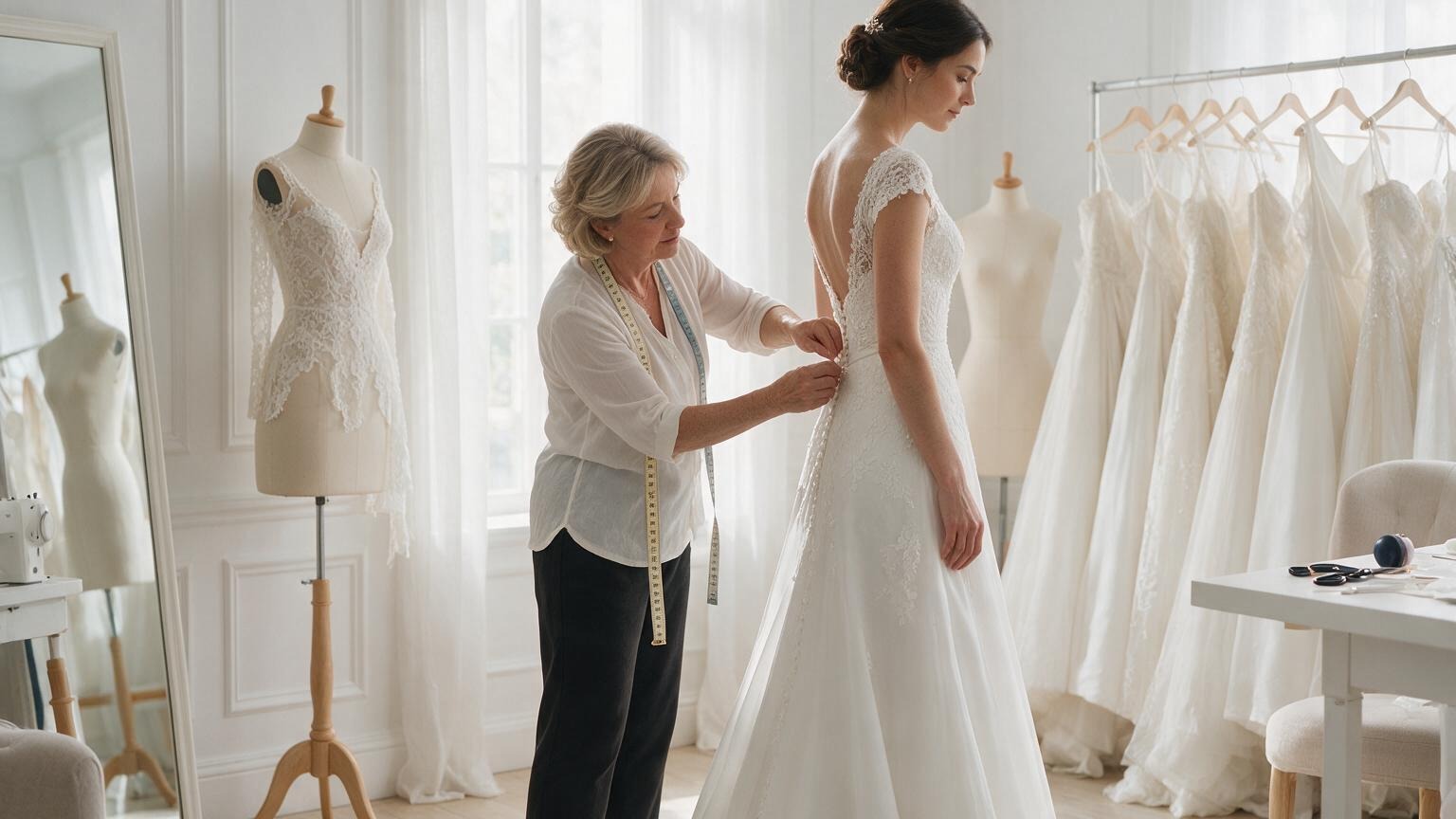
Almost no wedding dress fits perfectly straight off the rack. Bridal gowns are sold in standard sizes and designed to be tailored to your exact shape, which means alterations aren’t a luxury; they’re the step that turns a beautiful dress into your dress. The single biggest mistake brides make isn’t choosing the wrong alterations; it’s leaving them too late. This complete guide walks you through exactly when to start, what to expect and how to plan your bridal alterations fittings with confidence for your wedding.
When Should You Start Wedding Dress Alterations?
For most brides, wedding dress alterations should begin around 8–12 weeks before the wedding. This gives enough time for multiple fittings, careful adjustments and final finishing touches while keeping the fittings close enough to the wedding that your measurements are more likely to remain consistent.
If your gown needs major restructuring, extensive detailing, or you’re planning a custom or heirloom restoration, consider starting earlier, around 3–4 months before the wedding. Complex bridal alterations can take more time, so starting early allows your tailor enough flexibility to make adjustments and ensure your gown is comfortable, secure and ready for the big day.
Why Timing Matters So Much
Wedding dress alterations are rarely a single quick job. A well-fitted gown often needs several rounds of adjustment with fittings spaced out so the tailor can refine the shape as they go. Rushing this compresses the process and leaves no room for the small refinements that make a dress look flawless.
Starting too early carries its own risk: your body can change over a few months through fitness routines, stress, or natural fluctuation, meaning a gown fitted five months out may no longer sit right on the day. The 2-to-3-month sweet spot balances both concerns with enough time for quality work, close enough for an accurate fit.
A Wedding Dress Alteration Timeline
Mapping your fittings against your wedding date keeps everything calm and on track. While every gown differs, a typical schedule looks like this. Around 8 to 12 weeks before the wedding, book your first fitting and initial measurements.
Roughly 4 to 6 weeks out, a second fitting refines the fit as the main alterations take shape. About 2 weeks before, a final fitting confirms everything sits perfectly and any finishing touches are complete. In the final week, you simply collect your gown, ideally with a quick try-on for total peace of mind. Building in this structure means there’s always time to adjust if something isn’t quite right.
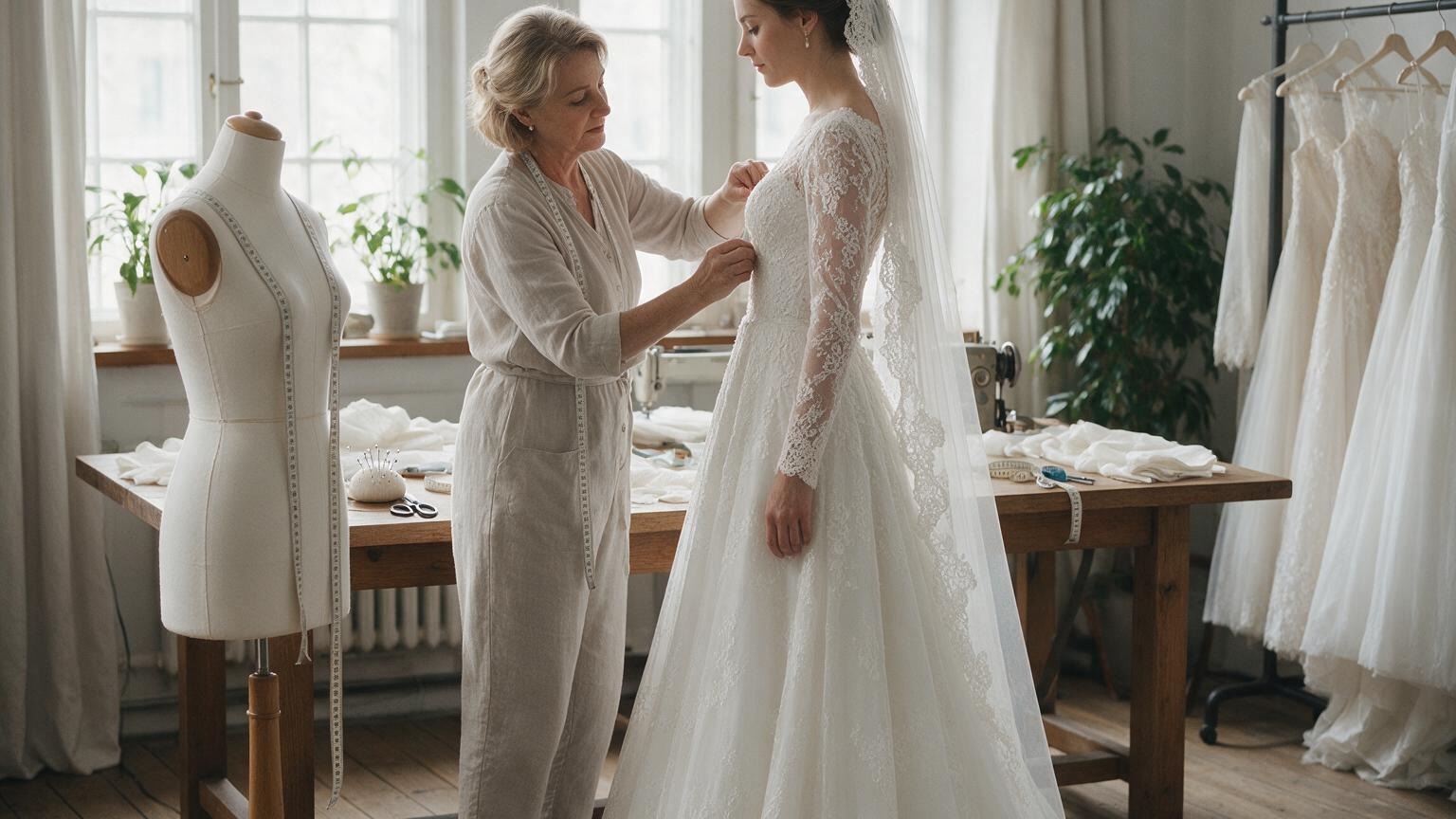
Common Wedding Dress Alterations Explained
Understanding the typical adjustments helps you discuss your gown with confidence. Most wedding gown alterations in Canberra fall into a few categories.
Hemming and length is the most common, ensuring the gown falls correctly; always bring your wedding shoes so the length is set to the exact heel height. Taking in or letting out adjusts the bodice and waist for a smooth, sculpted fit. Strap and shoulder adjustments correct how the gown sits, especially helpful for different body proportions.
Bustle addition lifts a train off the floor for the reception so you can move and dance freely. Beyond these, tailors handle bodice restructuring, adding sleeves or cups, boning and repairs to lace, beading or delicate fabrics. Bridal dress alterations can also restore vintage or heirloom gowns that need more extensive work.
Choosing the Right Bridal Tailor
Your gown is one of the most important garments you’ll ever wear, so the tailor matters as much as the timeline. Look for experienced specialists who work regularly with bridal and formal wear across different fabrics: satin, lace, chiffon and beaded designs each demand specific expertise.
Convenience counts too. Some brides prefer the calm of in-store fittings, while others value a mobile service that comes to their home for after-hours fittings during a busy engagement. Opal’s experienced tailors offer both options, so you can choose whatever reduces stress in the lead-up to the day
What to Bring to Your Fittings
A little preparation makes each fitting far more productive. Always bring the exact shoes you’ll wear so the hem length is correct along with any undergarments, shapewear, or accessories that affect the fit. Wearing your hair roughly as you plan to on the day helps too, particularly for strap and neckline decisions. Bringing a trusted friend or family member for a second opinion and to learn how to fasten a bustle or corset is a smart final touch.
Don’t Forget Preservation and Bridesmaids
Alterations are often just one part of the bridal wardrobe. Bridesmaids should also book alterations early when several dresses need to be coordinated for the same wedding, and booking these alongside your gown keeps the whole party coordinated and on schedule. After the wedding, many brides choose professional cleaning and preservation so the gown can be kept as a keepsake. Planning both in advance means nothing is left to a last-minute scramble.
Start Your Wedding Dress Alterations With Confidence
The secret to stress-free bridal alterations is simple: book early, plan your fittings and choose a tailor you trust. As Canberra’s highest-rated tailors and dry cleaners, Opal Alterations & Dry Cleaning specializes in bridal and formal wear of every style and size with both in-store and mobile fitting options across Belconnen and Canberra Centre. Give yourself the gift of time and walk down the aisle knowing your gown fits you perfectly.